Unbecoming: Surviving a Midlife Identity Crisis
When your old self reaches its shelf life
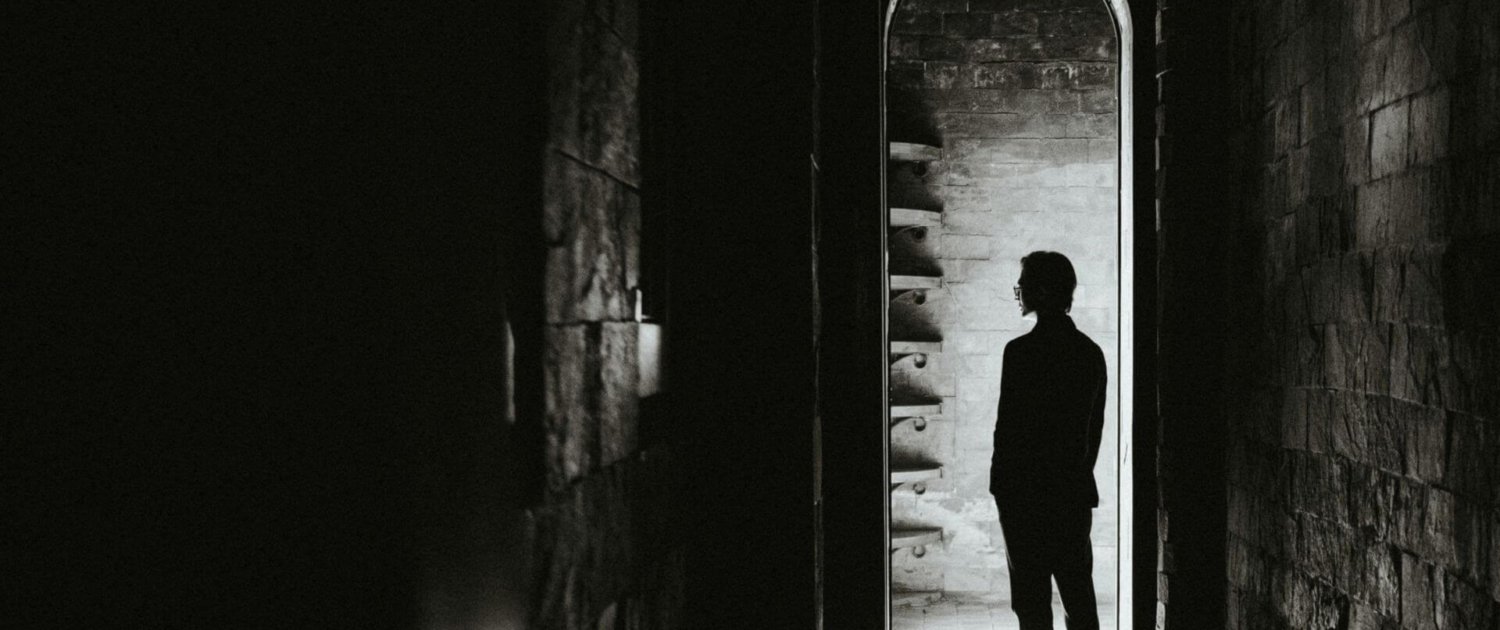
You’re standing in your kitchen on a Tuesday morning, coffee in hand, looking out at nothing in particular. Everything is fine. Technically. The job works. The relationship functions. The mortgage gets paid.
And you feel nothing.
Not sad. Not angry. Just… flat. Like you’re watching your own life through glass.
You’ve achieved things, built things, checked the boxes. But now it feels like you’re just going-through-the-motions. And standing in the middle of everything you worked for, you feel less like yourself than ever.
Like always, you put it down, tell yourself you’re tired, that it’ll pass, that you should be grateful. And it does pass. Until it comes back. A little heavier each time.
The identity you’ve been running for decades is reaching the end of its shelf life.
And it wants to evolve.
How you became who you are
You didn’t become yourself by accident, but you didn’t exactly choose it with full awareness either.
Your identity was built from what worked, what kept the peace, what made you acceptable and needed. You figured out early which version of yourself got love and which got criticised. And you adapted.
You became the responsible one. The capable one. The one who holds it together, doesn’t ask for too much, makes things work.
Most identities are stitched together around usefulness, not truth.
And that’s not wrong. It’s what got you here, kept you stable, functional, respected, maybe even successful.
But identities built from survival, expectation, and duty eventually hit a wall. They’re designed for the first half of life – the building phase, the proving phase, the “make it work” years.
Then one day, the utility expires.
And you feel it.
Why midlife
Midlife isn’t a crisis. It’s a reckoning.
For the first time in your adult life, the external demands loosen their grip just enough for your inner life to speak. The career is established or stalled. The kids are older or gone. The relationship has settled into whatever it’s going to be.
The catalysts look different for everyone. A marriage that’s turned into polite coexistence. Divorce that strips away the roles you hid behind. Career exhaustion that success can’t fix. An empty nest exposing how much of your identity was built on being needed. The unsettling gap between your “retirement dream” and financial reality. The sameness of days that used to feel fine but now feel like a trap.
Midlife doesn’t create the shift. It removes enough noise for you to finally hear it.
The in-between
When identity starts to loosen, most people grip harder.
Some ignore the feeling. They learn to live with a low hum of dissatisfaction, like a fridge making a weird noise. They tell themselves they should be grateful and push the questions down.
Others bury themselves in busyness. New projects, packed schedules, constant motion. Activity becomes the way to outrun the discomfort.
And some reach for quick fixes like a new job, a new hobby, a new city, a new relationship. Rearranging furniture in a house whose foundation is already shifting.
You can change everything in your life and still be the same person.
That’s why so many people follow the same patterns in every new situation they create. Same emotional dynamics. Same avoidance. Same resentment. Same compromises.
When you’ve spent decades being someone, the idea of not knowing who you are feels like free fall.
The void between who you were and who you’re becoming is liminal space. It feels like losing yourself. You can’t go back to who you were. But you can’t see who you’re becoming either. The things that used to define you – your roles, your certainties, your sense of what you’re good at – feel distant or hollow.
Most resist this space, not transformation itself.
So they rush through it. They grab for a new identity before the old one has fully released. They take the first clear option that presents itself just to feel solid again.
But rushing through this space means skipping the part where real change happens. You end up in a new costume instead of a new self.
The liminal space is where transformation happens. It requires patience, honesty, and the willingness to not know yourself for a while, a skill most people never practice.
The unbecoming
People say they fear change. But what they actually fear is the void – that stretch where you don’t know who you are anymore. That’s where you finally meet yourself.
Change is about doing something different. Transformation is about being someone different. One rearranges your life. The other rearranges you.
Identity transformation isn’t about becoming someone new. It’s about unbecoming someone you no longer are.
It means examining the identity you inherited, seeing the patterns you’ve been running on autopilot, questioning beliefs about yourself you’ve never questioned. Choosing consciously instead of automatically.
This is what I call unscripting.
It’s a slow, deliberate dismantling. And it requires staying in the uncertainty long enough for something true to emerge.
The choice
If you’re reading this, the shift has already started.
The restlessness isn’t random. The dissatisfaction isn’t ingratitude. The confusion isn’t a flaw.
They’re signals that something in you is ready to evolve.
You can ignore them and keep circling the life you’ve outgrown. Stay busy enough not to notice the walls closing in. Rearrange the furniture. Wait for the feeling to pass.
Or you can acknowledge what’s actually happening.
Something in you is ending. And something else is trying to begin.
You don’t need to know what comes next. You just need to stop pretending nothing is happening.
That’s the only real choice right now.