More Than Words
What Touch Says That Love Cannot

The Morning That Spoke Without Words
Last year, one of my closest friends came to visit. We’ve known each other for twenty years — most of our adult lives — and in all that time, we’ve never been physically affectionate. Not because anything was wrong. It just wasn’t part of how we were with each other. We talked, we helped, we showed up. That was our way.
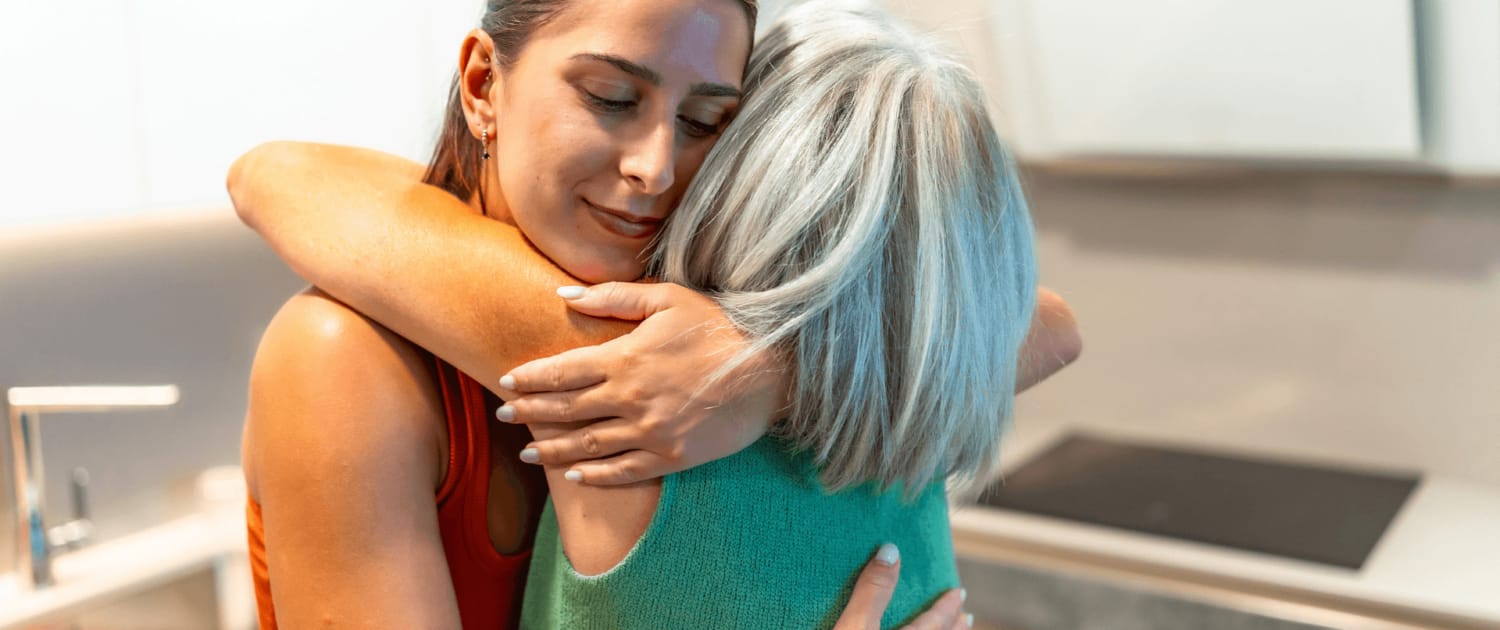
That weekend we went out, and I ended up drinking too much. The next morning, as I was lying in bed, wrecked, she came into the room, lay down next to me, and put an arm around me. Didn’t say much. Didn’t try to cheer me up. Just stayed there.
It sounds small, but it wasn’t. Those few minutes said more than twenty years of friendship ever had. I felt it in a way I couldn’t explain – like something in my body understood what my mind never had words for.
All that history between us, all those years of loyalty and conversations and showing up for each other in hard seasons, and one small gesture on a Sunday morning reached me in a way all of that somehow hadn’t.
That is not a small thing to notice about yourself.
“I Love You”
We are remarkably good at telling people we love them.
We say it. We text it. We show up when it matters, remember the important dates, ask the right questions, stay on the phone longer than we planned. A lot of us are emotionally articulate now in ways previous generations weren’t. We have language for needs, patterns, wounds, attachment styles. We can explain ourselves beautifully.
And yet most of us, if we’re honest, can name a relationship where everything looked right – the care was real, the words were right, the effort was there – and still something didn’t quite reach us. We were loved and we knew it. And somewhere underneath that, a low persistent sense that something was slightly off.
Not because the love wasn’t real. Because love can be entirely real and still not show up in the form the body recognises.
Because there is a register beneath words. Beneath explanation. Beneath all the careful ways we’ve learned to express what we feel. Something the body understands before the mind has a chance to interpret it.
And most of us, however fluent we’ve become in everything else, have never learned to speak it.
The Register Beneath Words
Gary Chapman spent years mapping the ways people give and receive love – words of affirmation, quality time, acts of service, gifts, physical touch. Five languages. And what I keep returning to isn’t the differences between them. It’s that every single one is an attempt to answer the same question.
How do I show you that you matter to me in a way you can actually feel?
The language is personal. The question is universal.
Words arrive and we process them. We hear I love you and something in us — depending on our history, our mood, our relationship with the person saying it — decides how much to believe it. We receive it through the part of us that evaluates.
Touch doesn’t go through that door.
It reaches somewhere older. Something that was taking in information about safety and warmth and belonging long before it knew what any of those words meant. A hand on a shoulder. A body next to yours that isn’t going anywhere. An arm that holds on a little longer than the situation requires.
The body receives that before the mind has a chance to question it.
A hug has its own grammar.
A hug that holds you half second longer than expected. The one that tightens just before it lets go. The one that arrives without warning in the middle of a hard conversation, not as comfort exactly, just as presence.
Each one says something different. Each one is understood immediately, without translation, without any decision about whether to believe it.
And somewhere along the way, for most people, that vocabulary narrowed. Hugs became either brief and social – the greeting, the goodbye, the polite container – or they became reserved for crisis. The vast middle ground, where affection moves freely and means nothing complicated, mostly disappeared.
Most of us are saying very little in a language that has a great deal to say.
That was what my friend gave me that morning. And what struck me later was that none of her words could have done the same thing. She could have said I’ve got you. She could have said you’re safe, rest. I would have believed her. I would have heard it, processed it, decided what to do with it.
This was something else. It landed somewhere the words never reached.
The body doesn’t debate tenderness the way the mind does. It recognises it. Or it recognises its absence.
Love, But Without Touch
And I think that is the part many of us are quietly living without.
Not without love. Without touch.
Most people I know are loved in some form. They have people who would answer the phone at 2am, people who would help in a crisis, people who genuinely care what happens to them.
But far fewer are touched with uncomplicated affection. Far fewer are held, reached for, leaned against. Far fewer know what it feels like to be physically reassured without having to ask for it, without having to fall apart first, without it being made into something bigger than it is.
And because that absence is so normal, most of us don’t know to name it. We just carry it.
That kind of loneliness is hard to explain because it doesn’t look like loneliness from the outside. It looks like a person who is fine. Loved, even.
But being loved is not always the same as feeling met.
I think that’s what that Sunday morning exposed in me. Not some grand trauma or a devastating revelation. Just a very simple truth: there was a form of tenderness I had lived a long time without, and I had gotten so used to living without it that I no longer knew it was missing.
Until it wasn’t.
Until someone who loved me in all the familiar ways suddenly loved me in a new one.
This is also, incidentally, why people stay.
The Language of Affection
I needed that morning to understand what all those years had been missing.
Not her fault. Not mine. We just hadn’t spoken that language with each other. And I hadn’t known we weren’t speaking it until she lay down next to me and, without saying anything important, said everything.
It told the truth more directly than words ever had.
I think about that a lot now.
How many of us have spent years – comfortable, connected, genuinely loved – quietly mistaking that distance for being fine?